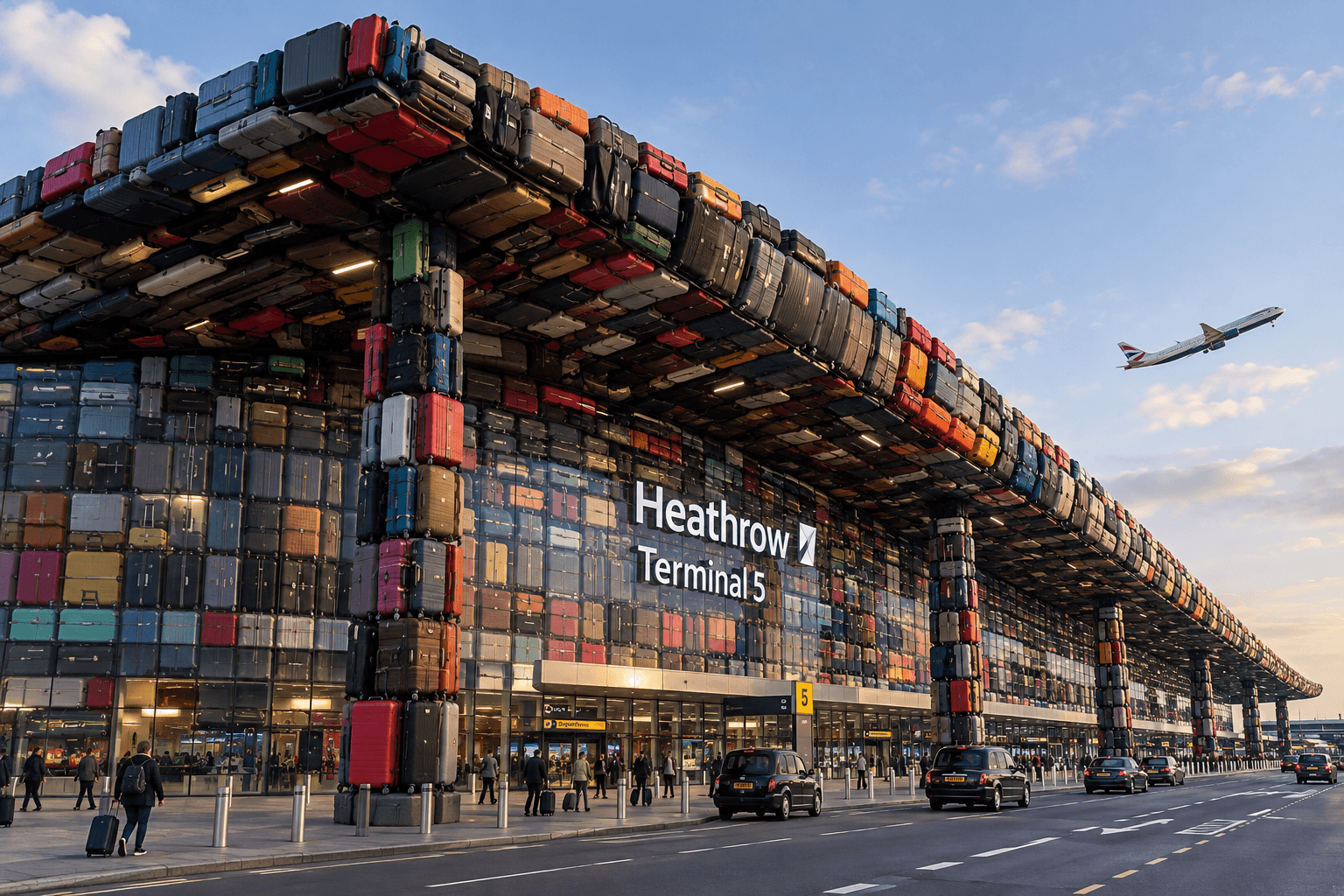
On 27 March 2008, Heathrow Terminal 5 opened for business. It had taken six years and £4.3bn to build, and it came in on time and on budget. A fortnight earlier, BAA's strategy director had told the Press the baggage system would work perfectly on day one.
It didn't. On the first day alone, 36,584 passengers were caught up in the chaos. Over the next ten days, around 42,000 bags failed to travel with their owners and more than 500 flights were cancelled. Within days, a minister was answering questions about it in the House of Commons.
The story usually gets told as "they didn't test enough". That's not quite right.
BAA ran 66 public trials with 15,000 volunteers and put 400,000 bags through the system before a single real passenger arrived. The fully loaded baggage system was tested around 20 times. They tested every part. They just missed the part that mattered.
On the first morning, baggage staff struggled to get into the car park because not enough barriers were open. Those who made it then queued at staff security. Plenty were working in a building they'd only been shown round while it was still a building site. Bags came through, nobody was there to take them off, and the system choked. By the end, luggage was being lorried off-site to be sorted by hand.
BA's chief executive, Willie Walsh, made a telling point to the Transport Committee. Any one of those problems, he said, they could have coped with. It was all of them landing at once, right at the start, that did the damage.
And every one of them sat in a gap.
BAA owned the building and the baggage system. BA ran the operation. The dividing line was a point on the baggage belt called the lateral - BAA's responsibility stopped there and BA's handlers took over. Each side prepared its own bit. Nobody owned the join.
The Committee's report put most of the blame on poor communication between owner and operator. Daily joint operations meetings only started once things had gone wrong. BAA's new chief executive, Colin Matthews, said that with his time again he'd focus on "keeping British Airways and BAA in the same room".
Marketing ops breaks in the same places. Rarely in the big, visible bits like the tech stack or the agency roster. Usually in the joins. The decision everyone assumed someone else had made. The handoff between the brand team and the performance team, where a brief goes in one end and something slightly different comes out the other. The platform nobody likes and everybody works around, propped up by a small cottage industry of spreadsheets. None of it is anyone's direct responsibility, so none of it gets fixed.
When things go wrong, we're quick to blame what we can see: the rubbish tech, the patchy training, the lack of testing. But the real fault is usually in a join few notice and nobody owns.
Joins are hard to spot from inside any one team. That's what a Waypoint is for - stepping back to look at the gaps between the pieces, not just the pieces themselves. For a conversation, get in touch.
Source: House of Commons Transport Committee, "The Opening of Heathrow Terminal 5", Twelfth Report of Session 2007-08 (HC 543), November 2008, including oral evidence from BAA and British Airways.