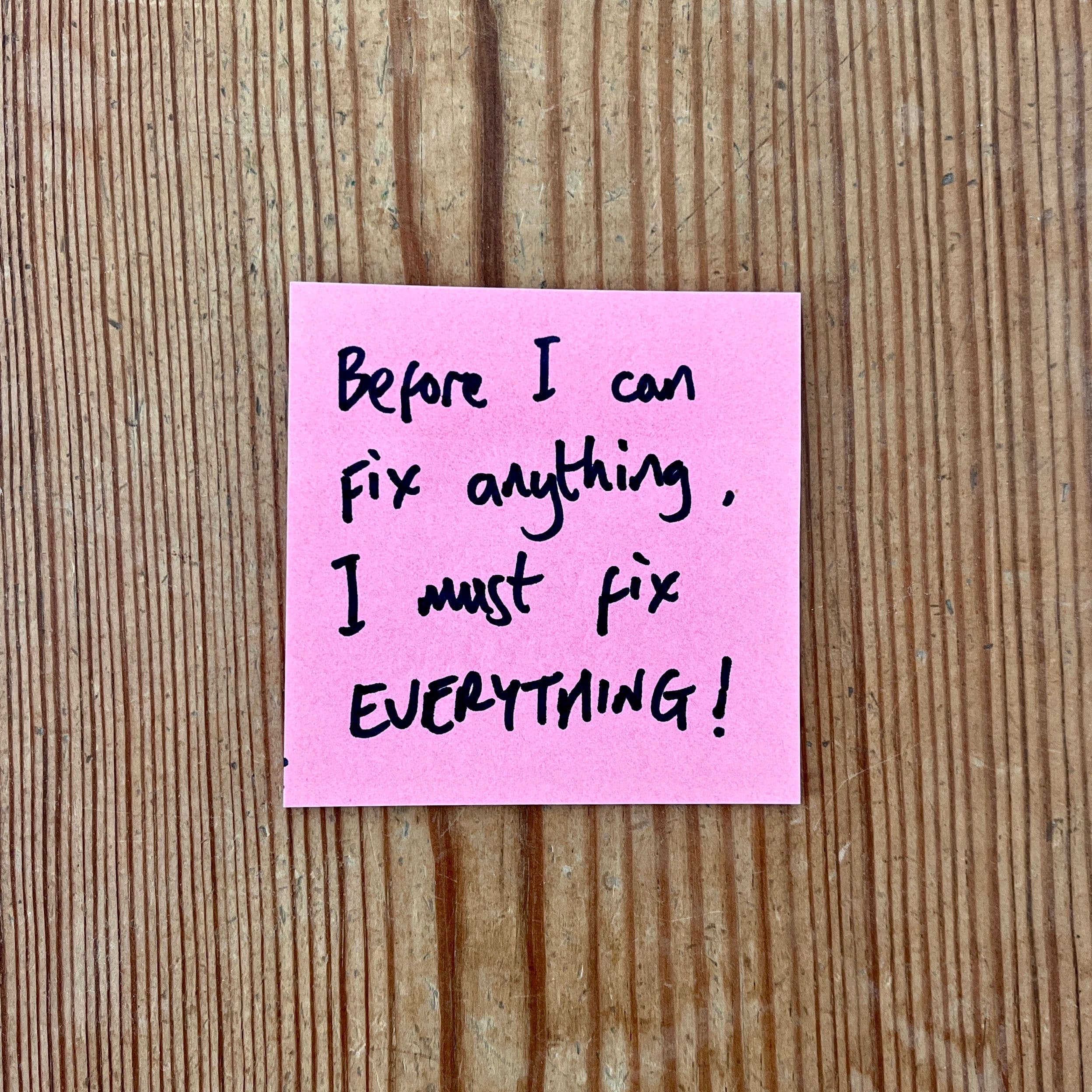
Stop trying to fix everything at once.
It's a flawed approach we come across a lot.
A marketing function gets messy. The tech doesn't talk to itself, the processes grew up around people who've since left, and nobody's quite sure who signs off what. So the conclusion is that it all needs fixing, and it all needs fixing together. A big programme. A transformation.
That's one way to do it. It's also the expensive way.
Big programmes take time to scope, time to approve and time to land. When priorities shift every quarter and the tech moves faster than that, the ground changes under your feet before you've finished. Things slip before they ship. Budgets get trimmed halfway through. And you're left with a half-baked solution to a big problem, plus a team that's sick and tired of hearing the word "transformation".
There's a better model, and it's over two hundred years old.
During the Napoleonic Wars, the French army surgeon Dominique-Jean Larrey stopped treating the wounded in order of rank and started sorting them by how badly they were hurt. The French word for sorting, trier, gave us "triage". Modern emergency medicine added a second question: not just who's in the worst shape, but who can we actually help right now?
Both questions work just as well in marketing.
Start by finding the problem. We call it operational drag: the friction in systems, processes and tech that slows good people down. It's usually hiding in plain sight - the three-week approval loop, the report someone rebuilds by hand every Monday, the platform half the team actively works around.
Then prioritise. Weigh each source of drag by how much it's costing you and how realistically you can fix it. The biggest problem isn't always the right place to start if you can't move it yet. The right first thing sits where severity and solvability meet.
Only then do you act. Pick that one thing, fix it properly and get the team back into flow. Each fix frees up time and goodwill for the next.
In our experience, most marketing leaders already sense what's wrong. That's rarely the hard part. The hard part is choosing, then seeing the change through while everything else shouts for attention. Deciding on the right first thing becomes everything.
If that sounds familiar, a Waypoint is a good place to start. It's a confidential hour with us, talking through what's slowing your team down, followed by a short written read on where we'd look first. No pitch, no audit. Just a clearer view of your first thing.